
Base problems get fixed, not covered
If the base is soft or saturated, a new surface will mirror the failure. We identify weak areas and rebuild them so the mat isn't doing a base's job.
Serving Cleveland, Ohio & surrounding areas
Mon–Fri 8am–6pm · Sat 9am–2pm
Asphalt paving · Cleveland, Ohio
Get a smooth, tight-finished asphalt surface with clean edges, solid drainage, and a base built for Northeast Ohio freeze-thaw cycles. We provide clear scopes, realistic schedules, and workmanship you can see in the finished mat.
Built below the surface
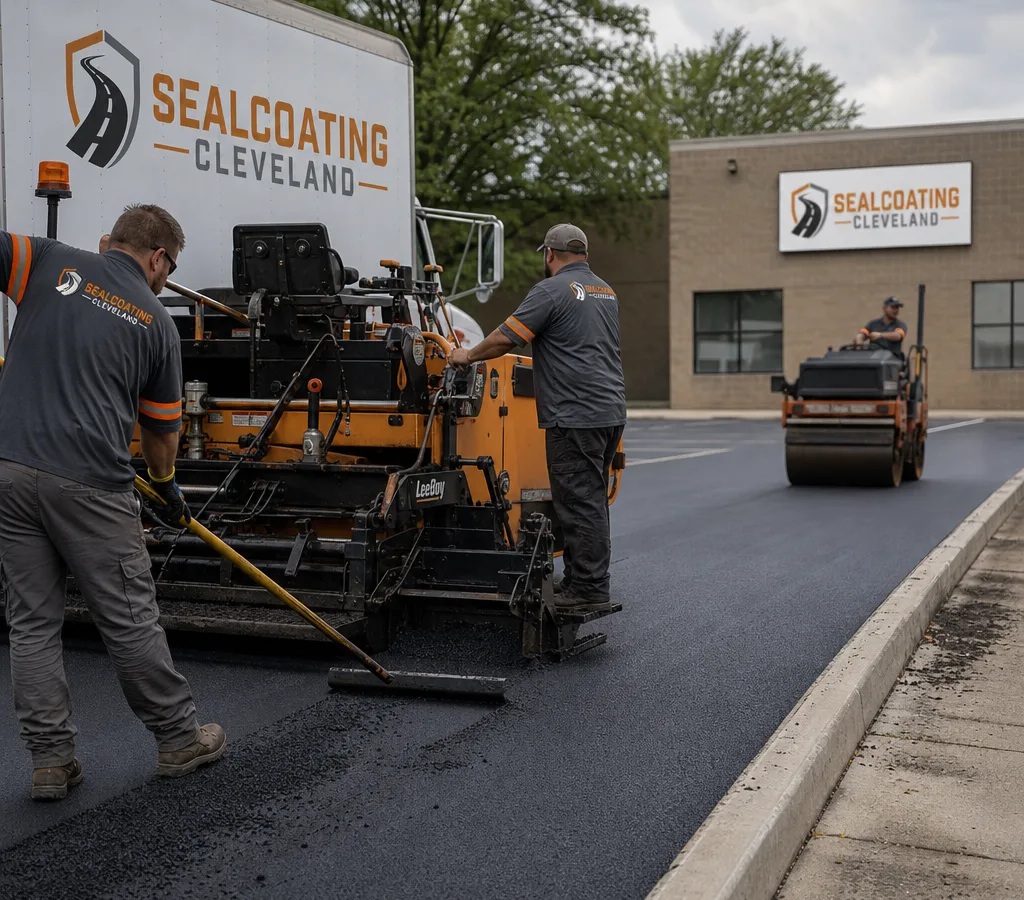
If you're searching for asphalt paving Cleveland Ohio, you're likely trying to solve one of a few problems: rough and rutted pavement, standing water after storms, crumbling edges, or an old surface that has reached the point where patching never looks right for long. Good paving starts before the first ton of mix shows up. It starts with how the base is prepared, how water is directed, and how compaction is handled while the asphalt is still at the right temperature.
Sealcoating Cleveland handles new paving and replacement paving for residential and commercial properties in Cleveland. Work can include driveway paving, parking lot paving, private lane paving, and paved access areas that need to carry delivery traffic. When the surface is meant to last, details matter: base thickness and stability, proper grading, edge restraints where needed, correct joint construction, and a final surface that drains instead of holding puddles.
Cleveland paving also comes with local realities. We plan around the seasonal temperature swings that affect paving windows, and we pay close attention to drainage because ponding water accelerates cracking when it freezes. For properties with tight access or active parking needs, we also help stage the work so you can keep moving while the new asphalt cures.
From subgrade to surface
A quality asphalt job is more than a new black surface. Most projects follow the same core building blocks, adjusted to your site conditions and expected traffic.
Evaluation and scope: We look at existing pavement condition, base failures such as soft spots, pumping, and alligator cracking, drainage patterns, and how the space is used. That's what determines whether you need full removal and replacement, a localized rebuild, or a pave over an acceptable base.
Base and grading: The base course carries the load. We regrade to establish positive drainage and correct low spots, then compact in lifts where aggregate is placed. If your existing base is stable, we focus on bond and grade control.
Asphalt placement and compaction: We place hot-mix asphalt, keep joints tight, and compact to density with steel and pneumatic rolling as the mix cools. Compaction is the make-or-break step for durability.
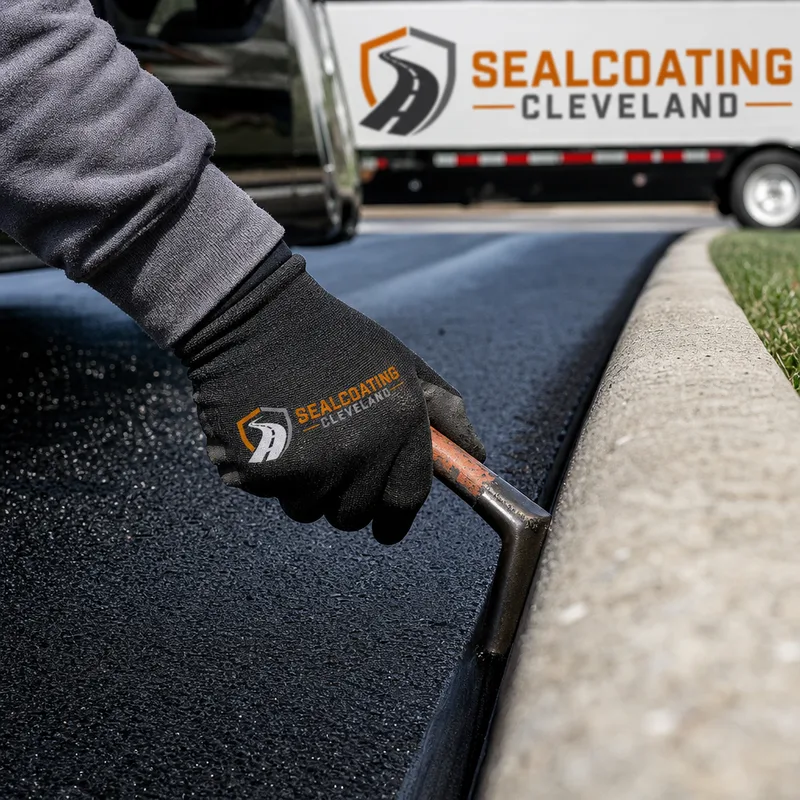
Edges, transitions, and drainage details: Clean edges, smooth transitions to sidewalks, aprons, garage slabs, and catch basins, and attention to water flow keep the finished surface usable and easier to maintain.
If you also maintain existing pavement, our asphalt sealcoating service is a common next step after new paving has had time to cure and the site is ready for routine protection.
Application details matter
Durable pavement depends on fixing what is underneath, controlling water, and compacting the new mat while conditions are right.
If the base is soft or saturated, a new surface will mirror the failure. We identify weak areas and rebuild them so the mat isn't doing a base's job.
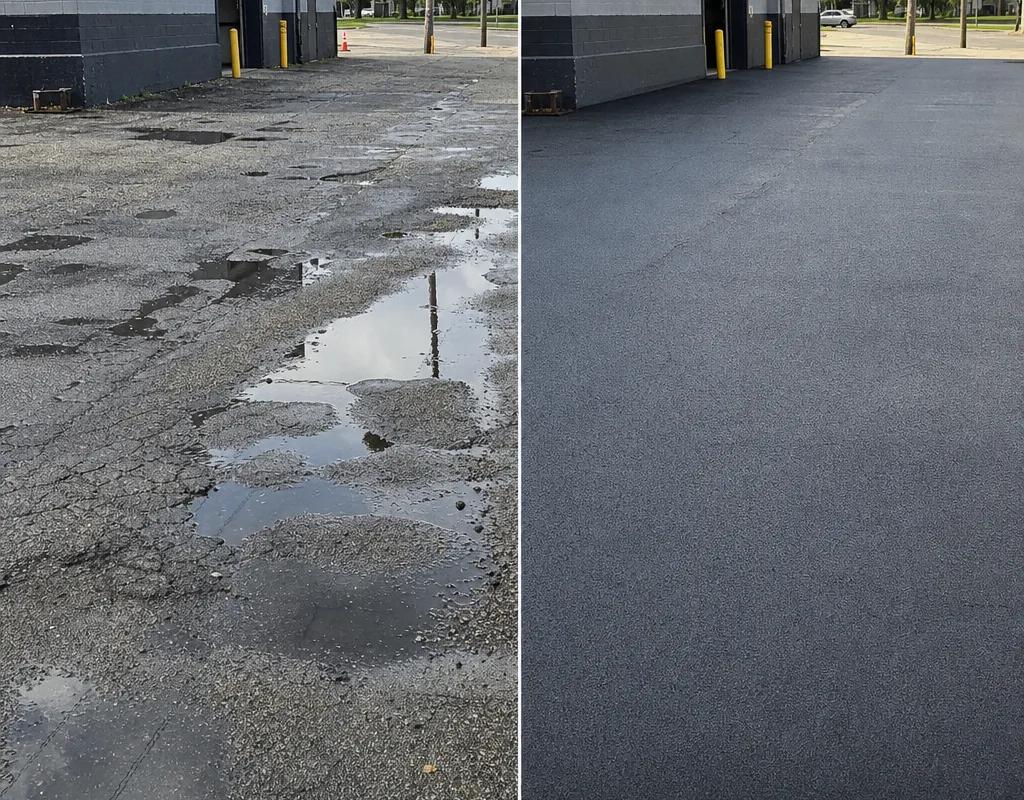
Standing water shortens pavement life. We shape the grade and transitions so water moves off the surface instead of pooling at low spots.
Longitudinal joints, tie-ins, and edges are common failure points. Proper construction helps prevent early raveling and edge breakdown.
Rolling while the mix is in the correct temperature range improves density and reduces permeability, which helps limit water intrusion.
We outline what gets removed, what gets rebuilt, target thickness, and how the site will be staged so you can make an apples-to-apples decision.
Practical pricing guidance
Asphalt paving in Cleveland typically ranges from about $4 to $10+ per square foot, depending on whether it's a straightforward overlay or a full remove-and-replace with base repair. Small residential driveways often land in the $3,000 to $9,000 range, while larger parking lots and access drives vary widely with layout and phasing.
Final price depends on square footage, thickness and lift design, how much excavation and base reconstruction is needed, drainage corrections, access for trucks and equipment, and the amount of handwork at edges and tight areas. Exact pricing is confirmed after an on-site evaluation and a written scope.
From inspection to traffic
We review how vehicles move through the area, where water goes today, and what sections show structural failure versus surface wear.
You get a written outline of removal, if needed, base work, asphalt thickness, drainage corrections, and any staging needed to keep the property usable.
We mill or remove failed asphalt where required, correct soft spots, set grades, and compact the base so it's ready to carry the new surface.
Hot-mix asphalt is placed, joints are constructed carefully, and the mat is rolled to density while the mix cools.
We check transitions and drainage, tidy the work area, and provide guidance on when to drive and park on the new surface based on conditions.
Finished pavement
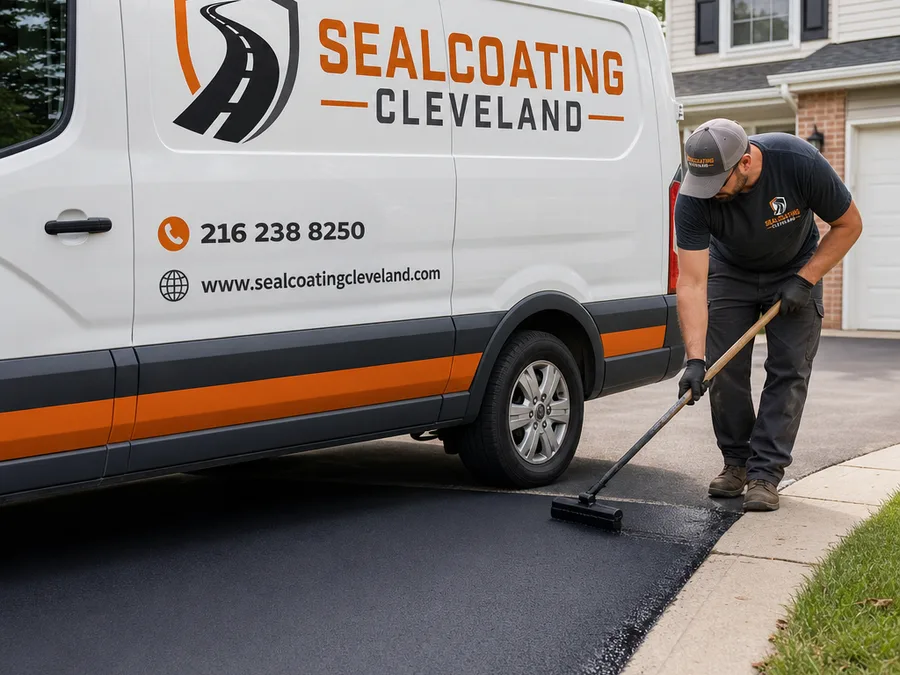
Practical answers
Overlay works when the existing pavement and base are structurally sound and drainage is acceptable; remove-and-replace is the right call when you have widespread alligator cracking, pumping soft spots, or failing edges. In Cleveland, freeze-thaw makes base and water issues show up fast, so we focus on whether the problem is structural or just surface wear.
Most residential driveways can handle light vehicle traffic within about 24 to 48 hours, but full curing takes longer and hot summer days can make the surface more prone to scuffing early on. We give site-specific guidance based on temperature, thickness, and whether turning movements will happen in tight spots.
Thickness depends on what the pavement needs to carry and how strong the base is, not just the square footage. Passenger-vehicle driveways typically use less asphalt than areas that see deliveries, dumpsters, or repeated turning from heavier vehicles; those often require thicker design and stronger base preparation.
Edge failure usually comes from weak edge support, water infiltration, or traffic running off the side of the mat. A durable fix may include rebuilding the edge, improving grade so water doesn't sit along the shoulder, and adding proper confinement where the pavement meets soil or gravel.
Yes, as long as the fix includes grading and drainage corrections instead of only adding a thin layer of asphalt. We correct low areas by addressing the base and setting grade so water flows toward the right discharge points rather than staying on the surface.
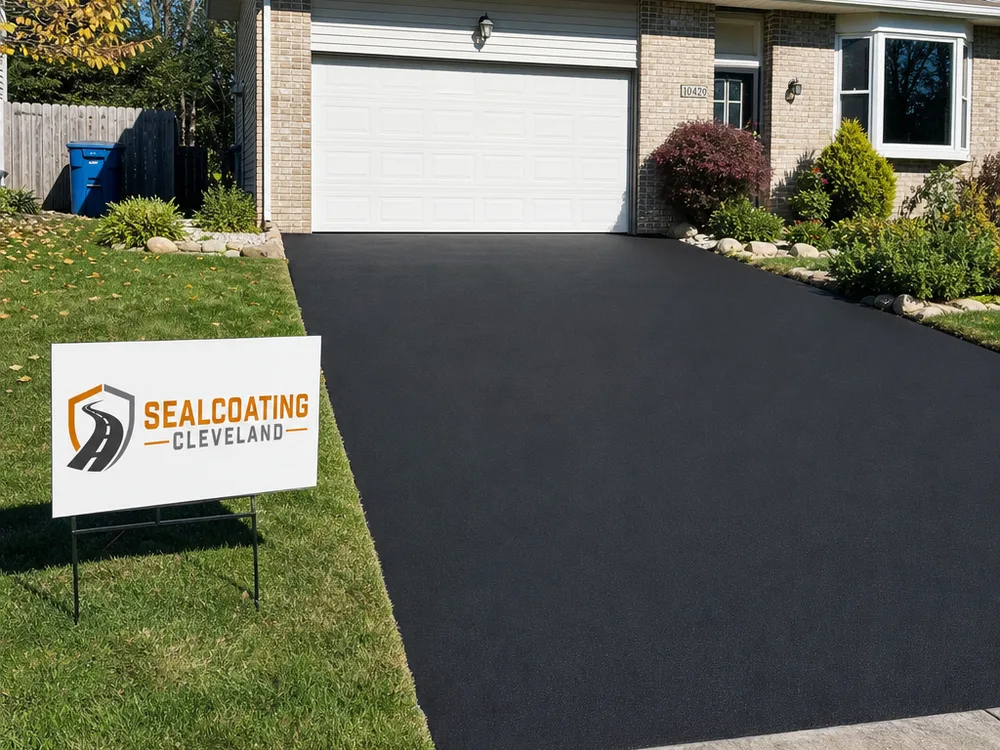
Yes. We pave residential driveways and private lanes as well as commercial parking areas and access drives, and we can plan the work in phases when a property needs to stay open. Tell us how the area is used and any access constraints, and we'll build the scope around that reality.
Start with an on-site evaluation
If your driveway or lot is cracking, holding water, or breaking down at the edges, start with an on-site evaluation. We'll confirm what needs to be rebuilt, what can stay, and what the finished grade should look like before any material is ordered.